


HIV
CBD may help HIV-infected brain cells
After HIV hijacks immune cells in the bloodstream, it breaks through the heavily guarded blood-brain barrier and targets the brain’s immune cells. These cells then enter a hibernation period. Neuroinflammation can reactivate them, perpetuating a vicious cycle where HIV spreads out of the brain and into the body’s bloodstream.
CBD’s anti-inflammatory effects may stop this process. Adriana Yndart Arias, a doctoral student in the Robert Stempel College of Public Health & Social Work, made this discovery in the lab of Herbert Wertheim College of Medicine distinguished professor Madhavan Nair. She tested CBD on HIV-infected microglia cells, searching for specific markers that exposed whether the cells would activate. CBD-treated cells not only reduced the numbers of inflammatory molecules but also kept infected cells dormant. This research was supported by the National Institutes of Health.
“Antiretroviral medicines that keep the virus from replicating cannot effectively cross the blood-brain barrier, and so the brain becomes a repository for HIV.”
— Adriana Yndart Arias
ARTIFICIAL INTELLIGENCE
Matchmaking for proteins
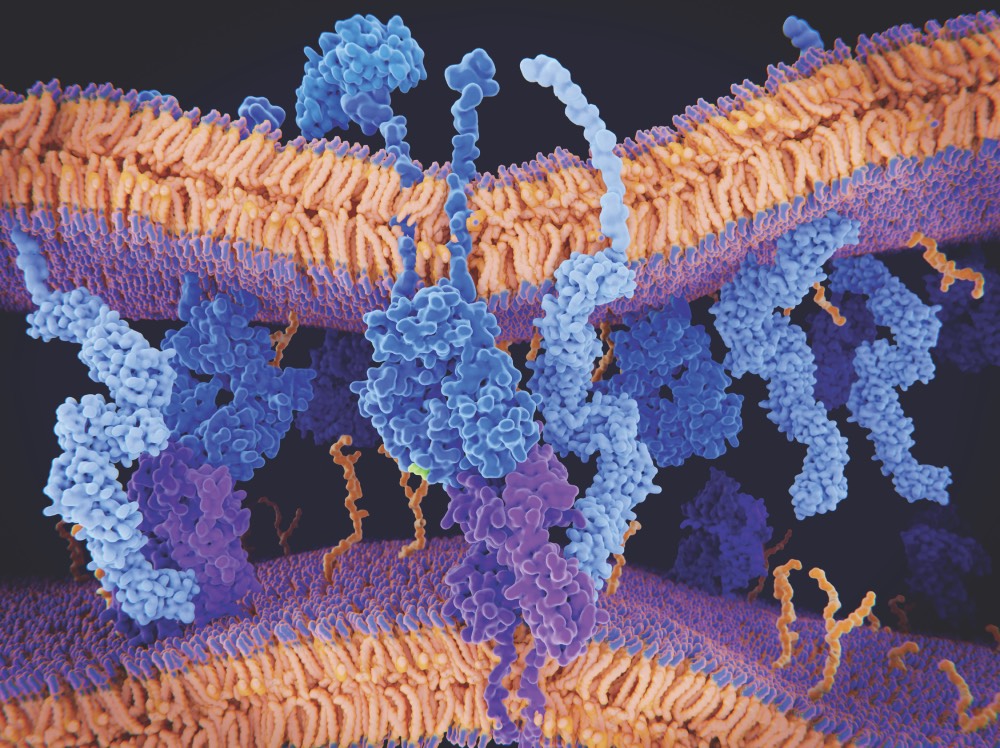
why researchers created a machine learning model that outperforms similar state-of-the-art software to predict how protein molecules will join. Their AI-based method, published in Nature Machine Intelligence, uses biological and structural information to score the strength of the bond.

The team included Knight Foundation School of Computing and Information Sciences Professor Giri Narasimhan and his doctoral student Vitalii Stebliankin, along with Associate Director of the Biomolecular Sciences Institute Prem Chapagain and molecular biologist Kalai Mathee.
INNOVATION
Aging tech
During the pandemic, older adults relied a lot on technology to stay connected to friends and family. Does this necessarily mean they might be more receptive to agetech, intended to improve quality of life for older adults worldwide? College of Business researchers wanted to find out. Pouyan Esmaeil Zadeh, an associate professor in information systems and business analytics, led two separate studies focused on older adults’ perceptions on two types of agetech: companion robots and smart toilets. Most participants held positive views. However, they also expressed significant concerns regarding privacy, cost and ease of use. These insights are important because they reveal what might be standing in the way of older adults embracing and using these new tools.
AUDIOLOGY
Decreased sound tolerance tool
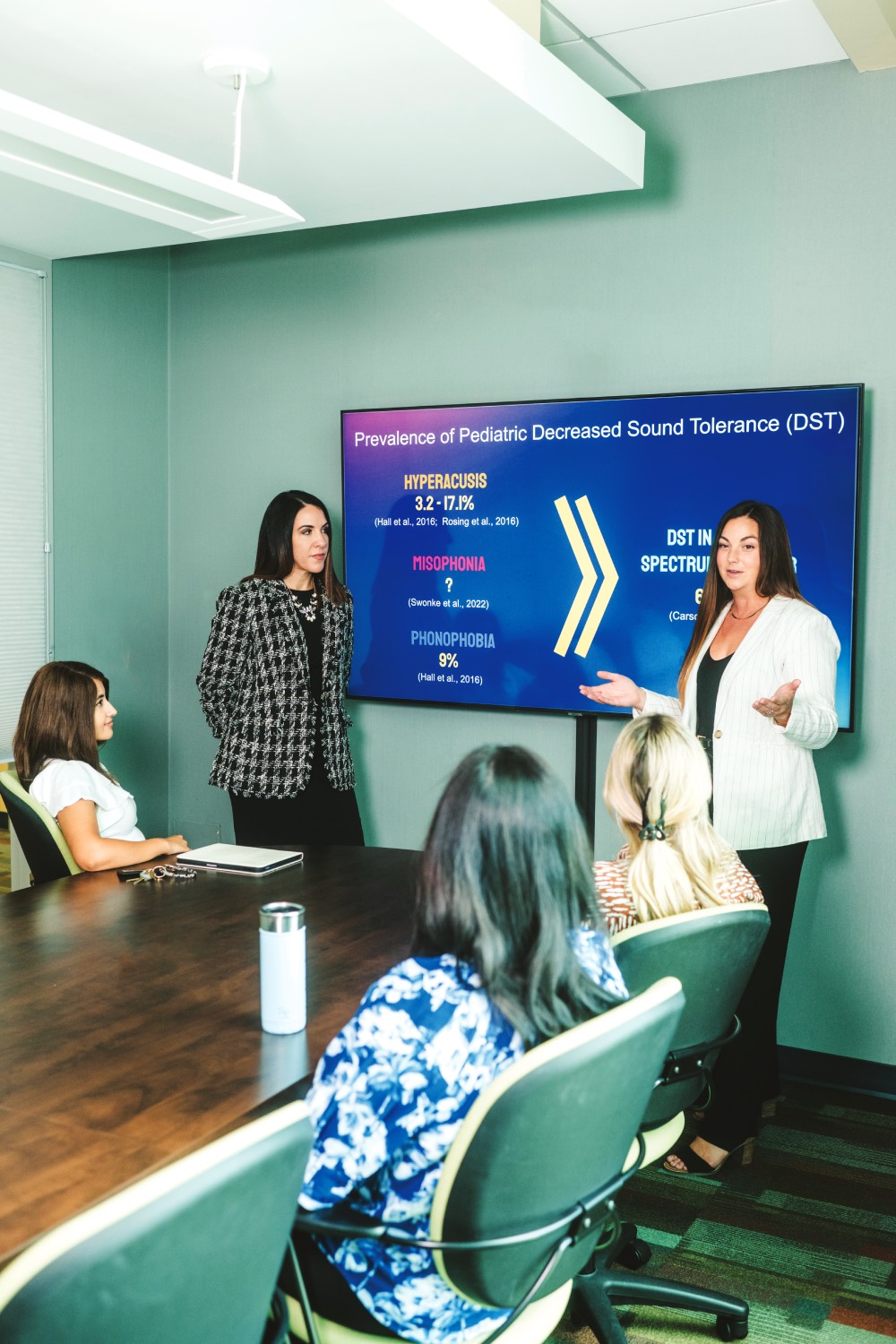

Tana Carson and Angela Medina from the Nicole Wertheim College of Nursing & Health Sciences collaborated with statistician Yuxi Qiu from the College of Arts, Sciences & Education, on this project.
“Awareness is the first step in getting interventions to help quality of life.”
— Tana Carson
link